Solar Monitoring Buying Guide: Devices, Alarms and Acceptance
Choose solar monitoring by equipment coverage, data quality, operating workflow and commissioning scope.
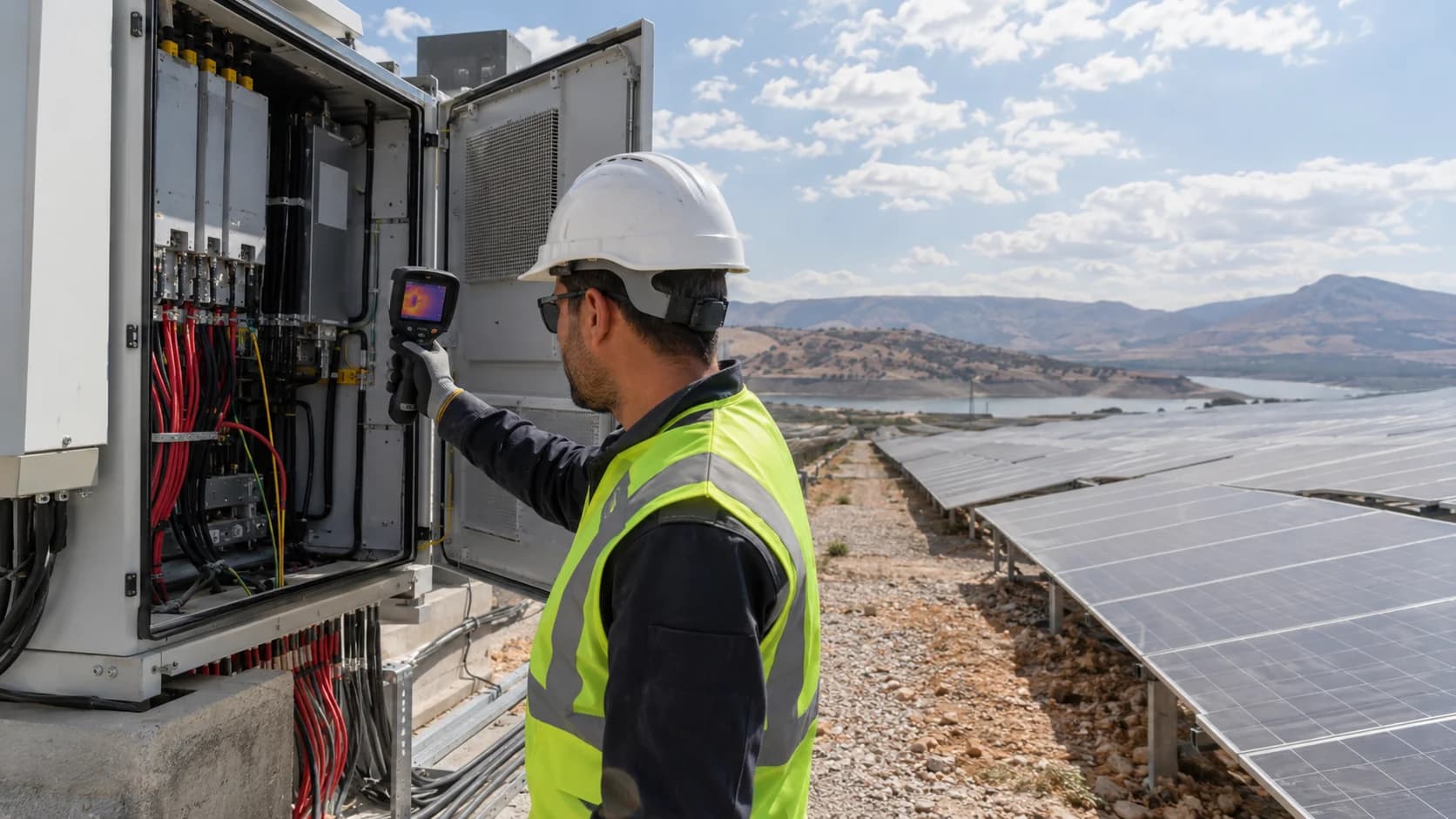
Choose solar monitoring by equipment coverage, data quality, operating workflow and commissioning scope.
Define the operating decision first
Start with the decision: identify lost production, dispatch maintenance or compare a portfolio. Map each decision to equipment, signals and responsible users. A brand list alone does not describe signal coverage or usable historical data.
Ask for a device and signal matrix
List inverter models, loggers, meters, relays and weather sensors. Confirm read/write scope, timestamps, units, sampling, retention and treatment of stale data. Specify string-level visibility where the equipment supports it.
Use a scenario-based demonstration
Ask the supplier to explain a low-output inverter using irradiance, neighbouring equipment and alarms. Test a communication interruption separately from a production stop. Follow the finding into a notification, report and maintenance decision.
Compare total delivery scope
Compare software, gateways, communication works, configuration, historical migration, training and support together. Define acceptance for signal correctness, alarm delivery, recovery after interruption and exports before signing.