enCoreEnergy · Energy and operational-resource optimization
Turn consumption, process context and operational constraints into verified action.
enCoreEnergy combines multi-utility measurements, industrial context and AI-supported analysis to improve energy performance across facilities.

What it solves
Consumption cannot be optimized from meter totals alone. Production, weather, occupancy, schedules, equipment state and user constraints determine whether a deviation is necessary, avoidable or actionable.
Multi-utility model
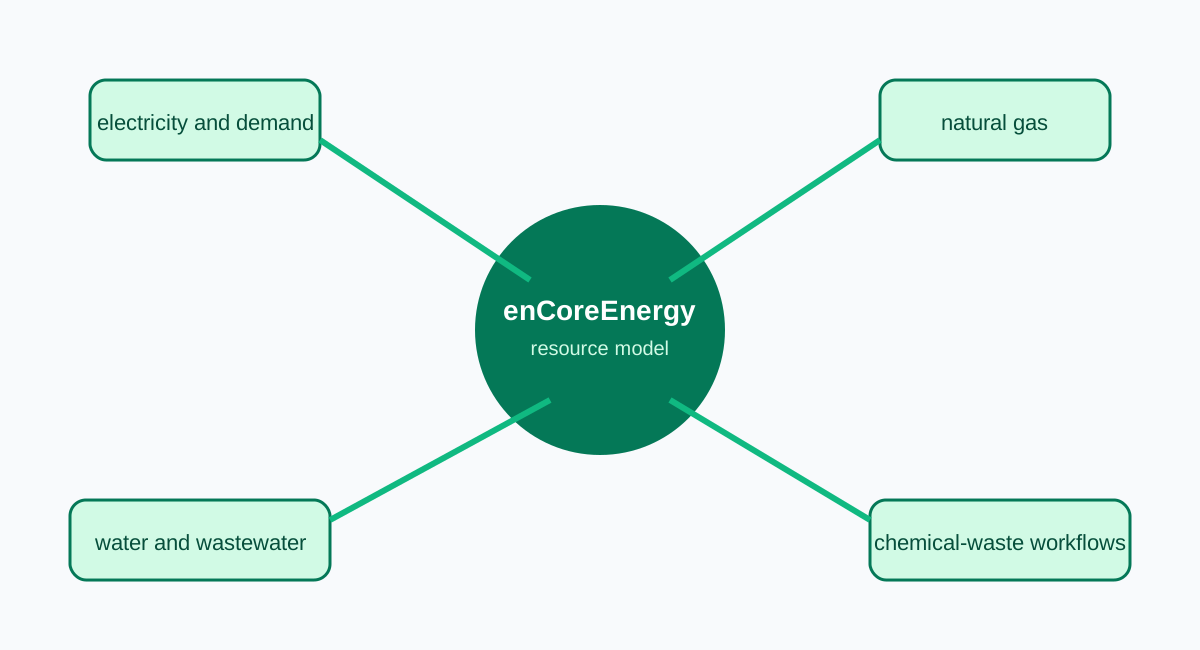
Bring electricity, gas, water, wastewater and chemical-waste records into one operational context.
Process-aware analytics
Normalize consumption using production, shifts, weather, operating state and defined process constraints.
Infrastructure optimization
Support approved strategies for HVAC, heating, cooling, lighting, pumps and other facility systems.
AI-supported decisions
Use defined anomaly, forecast, baseline and prioritization models with transparent inputs and human boundaries.
Workflows and controls
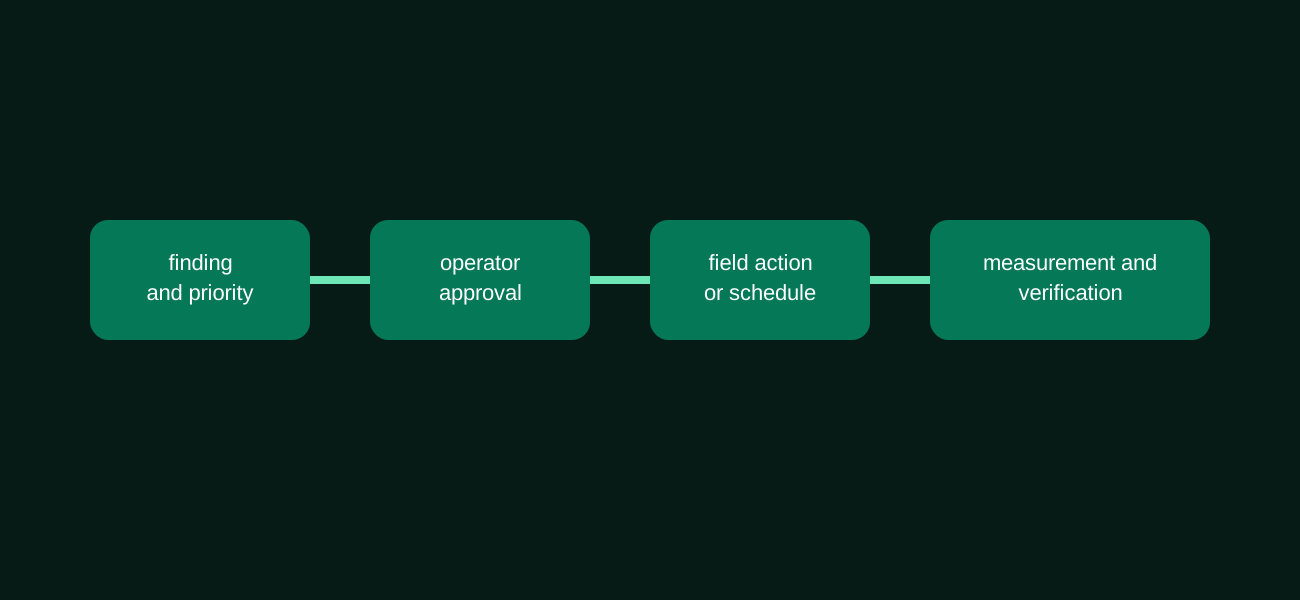
Move from finding to approval, schedule/setpoint change, inspection and measured outcome.
Measurement and verification
Compare reporting periods with agreed baselines, adjustments, actions and documented impact.
How it works
A traceable path from signal to operational action.
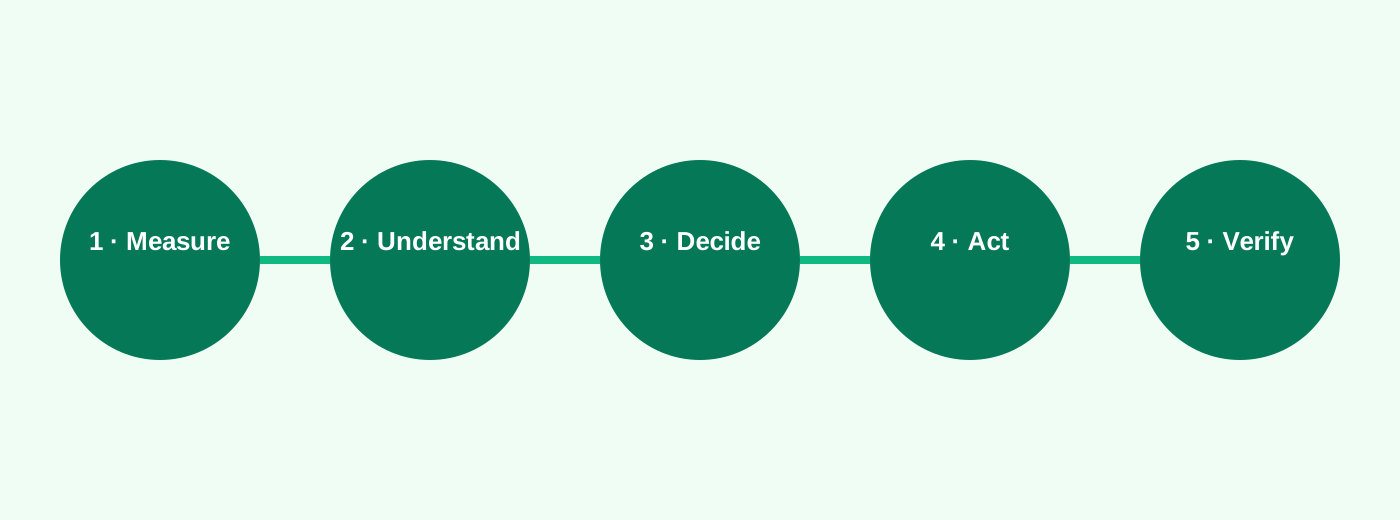
Measure
Collect energy, utility, equipment-state and operational data from meters, sensors, BMS, PLC and enterprise sources.
Understand
Normalize consumption against weather, occupancy, production, shifts, schedules and constraints.
Decide
Use rules, analytics and AI-supported recommendations to prioritize an appropriate action.
Act
Assign a workflow, request approval or execute an approved control strategy through Scadify/BMS/PLC.
Verify
Compare actual results to an adjusted baseline and retain evidence of the operational impact.
Use cases
Built around the operating context.
The right product configuration depends on equipment, data quality, control responsibility, operating policy and the evidence required by the project.
- Industrial multi-utility optimization
- Retail and distributed facilities
- Bank and branch portfolios
- Commercial buildings and campuses
- Pumps, water and process systems
Integration model
Connect the systems you already operate.
Governance and boundaries
enCoreEnergy supports measurement, records, workflows and reporting; it does not imply licensed waste treatment, transport or disposal. Direct control is limited by installed systems, interlocks and customer-approved policy.
Architecture and evidence
Make the operating model visible.
Product relationship
Defined responsibilities, connected operations.
enCoreEnergy owns consumption and operational-resource optimization. Scadify supplies local measurement and execution, while EnergyPortal provides enterprise consolidation and portfolio visibility.
Plan your deployment
Explain energy consumption per production unit
Example operating scenario
A factory uses more electricity despite similar output. Compare shifts, production volume, operating hours and utility meters before assigning the increase to a process or equipment group.
Data to prepare
Meter hierarchy, utility tariffs, production quantities, shift calendar, operating hours and allocation rules.
What Enlogy provides
Consumption allocation, comparable energy indicators and reports connect the deviation to an actionable operating decision.
Questions to ask before buying
- How are missing readings and changes in production handled?
- Can electricity, gas, water and process data share one facility structure?
- Which baseline and verification method will demonstrate improvement?
Illustrative workflow; project scope and acceptance criteria are agreed for your facility.
Standards compliance for this capability
Standards compliance for this capability
Enlogy provides full compliance with the standards below across development, integration and system operation and management.
Power quality and reactive power compensation
IEC 61000-4-30 · IEC 61000-4-7 · IEC 61000-4-15 · IEEE 519 · IEC 61921 · IEC 60831 · IEC 63497
Why you need it
Harmonics, flicker and reactive power can cause losses, equipment stress and interrupted production.
What Enlogy provides
Enlogy combines power quality measurements, harmonic and flicker analysis, capacitor-bank supervision and active correction equipment data to prioritise corrective action.
Explore this capability: Power quality and reactive power compensationIndustrial data models and production KPIs
IEC 62264 / ISA-95 · ISO 22400 · OPC UA · OPC UA Machinery · PackML
Why you need it
Energy performance needs production context, machine state and consistent manufacturing indicators.
What Enlogy provides
Enlogy connects enterprise and control layers, machine information models and operating states to explain consumption per production unit and identify improvement opportunities.
Consistent asset structures and measurement units
IEC 62832 · IEC 81346 · ISO 80000 · BIPM SI Brochure · UCUM · UN/CEFACT Recommendation 20
Why you need it
Cross-site comparisons fail when equipment names, quantities and units mean different things.
What Enlogy provides
Enlogy uses structured asset hierarchies, reference designations and consistent quantity and unit models across measurements, calculations, APIs and reports.
ISO 50001 energy performance management
ISO 50001 · ISO 50006 · ISO 50015
Why you need it
Energy teams need a repeatable way to establish baselines, track indicators and measure improvement.
What Enlogy provides
Enlogy manages significant energy uses, EnPIs, baselines, action plans and measurement and verification records, connecting continuous analysis to energy management.
AI governance and risk management
ISO/IEC 42001 · ISO/IEC 23894 · NIST AI RMF
Why you need it
AI-supported forecasts and recommendations need accountable decisions, monitored model quality and managed risk.
What Enlogy provides
Enlogy manages AI responsibilities, model lifecycle, forecast-versus-actual evaluation, risk records and human oversight in energy analysis and improvement workflows.
Explore this capability: AI governance and risk managementFAQ
Questions engineers and operators ask first.
Is enCoreEnergy only for electricity?
No. It can cover electricity, natural gas, water, wastewater and related resource workflows when the required measurements and integrations are available.
Can it control HVAC, lighting or pumps?
It can support direct or workflow-based action through Scadify, BMS, PLC or another approved integration; final scope depends on safety and operating policy.
How are savings verified?
Through an agreed baseline, reporting period, relevant-variable adjustments, action records and documented measurement and verification.
Next step